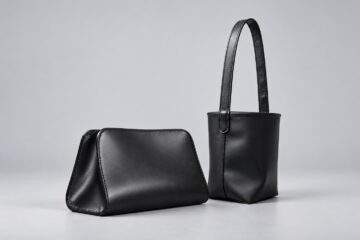

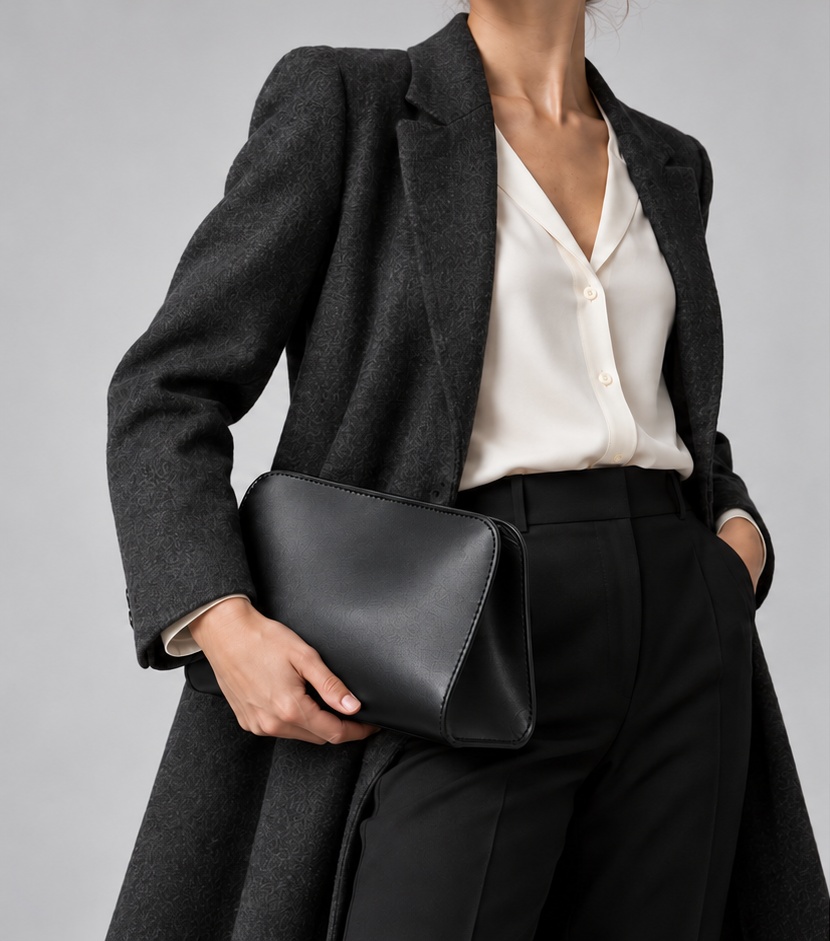
The main difference between a clutch and a shoulder bag is how you carry it. A clutch is held in the hand or under the arm, while a shoulder bag hangs from a strap. That choice affects how you move, where the bag sits against your clothes, and how it fits into your day.
When choosing between the two, begin with your routine and the belongings you actually carry. Then consider the shape. A bag should appeal to you in a photograph and make sense when you pick it up to leave.
Start with how you want to carry your bag
Think through an ordinary outing. You might be holding a coffee, checking your phone, carrying a coat, or moving between several places. If you prefer to keep your hands available, a shoulder bag is a natural starting point. Try it on and notice whether the strap stays where you want it as you walk and reach for things.
A clutch asks for a different habit: you carry the bag itself. That can suit a dinner, an event, or a daytime outing when you are comfortable keeping it in hand. Try holding it in the position you would naturally use, rather than judging it only on a shelf.
Check your essentials before choosing a size
Lay out the items you expect to take: your phone, keys, cardholder, glasses case, and any other essentials. Your own list matters more than a general label such as small, medium, clutch, or tote.
Check the bag’s dimensions and opening against those items. A phone may fit inside but still be awkward to take out; a rigid glasses case may need more depth than its length suggests. If you can try the bag, put your usual belongings inside and check that they sit comfortably without forcing the shape.
For an online enquiry, ask for measurements and details of the opening. A styled image can show a silhouette, but it cannot confirm what will fit inside.
Look at the bag with your outerwear
A shoulder bag can sit differently over a light shirt and a winter coat. Try it with the layer you expect to wear most often, and check the space beneath your arm. Notice where the body of the bag meets your waist or hip and whether you can reach the opening easily.
With a clutch, consider the sleeve as well as the bag. A wide cuff, a long coat sleeve, or a loosely draped jacket can change how you hold it. A few moments in front of a mirror are more useful than deciding that one bag shape suits a particular body type.
Choose the shape you want to see
Once the practical questions are settled, look at the outline. A wide clutch can create a horizontal accent beside the body. A shoulder strap introduces a longer line, with the bag forming a second point of interest lower down.
Ani and The Tote show this difference within a black palette. The Ani clutch has a broad, curved outline and a defined side profile. The Tote combines an upright body with a long shoulder strap. Compare the two against a familiar outfit and notice which proportion you prefer.
For outfit examples, explore One Wardrobe, Two Silhouettes, our styling notes for Ani and The Tote.
Let the occasion inform the choice
A clutch can work with daytime tailoring; a shoulder bag can accompany an evening dress. The useful question is how you want to carry your belongings in that setting.
For a dinner, consider whether you would rather hold the bag or wear it on your shoulder. For a longer day out, think about how often you will open it and what else you will be carrying. Dress codes may influence your choice, but the way you use the bag deserves equal attention.
Before you choose
Use these four checks when comparing a clutch with a shoulder bag:
- Your usual belongings fit without forcing the bag’s shape.
- You like the way you carry it, including with a coat or jacket.
- The opening is easy for you to reach and use.
- The silhouette works with clothes you already own.